


How Do You Achieve Consistent Release in Composite Molding?
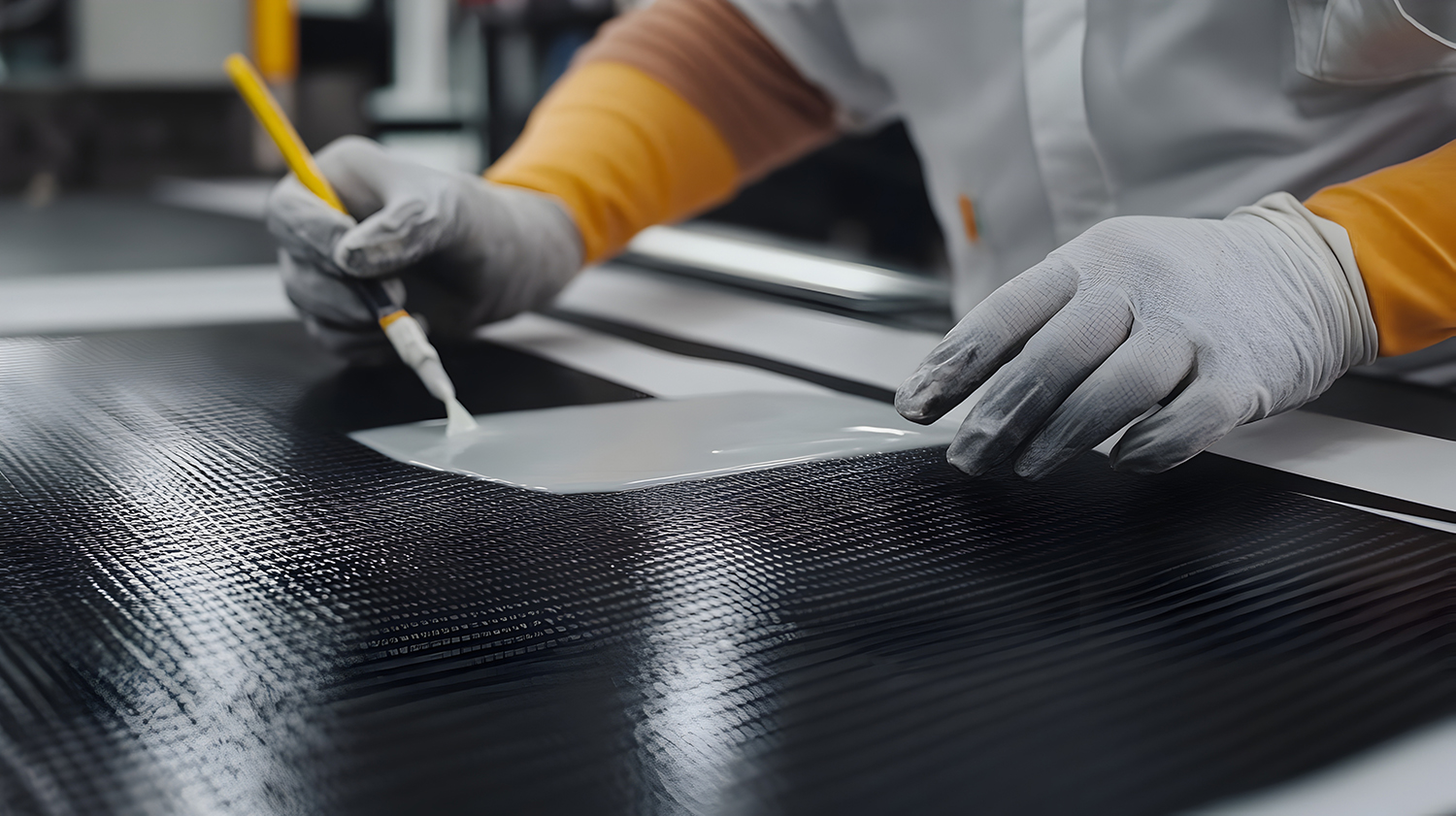
When your release is inconsistent, the impact shows up quickly: parts that stick, cycle interruptions, and lost production time. Identifying what is driving that variation and correcting it is the difference between a reactive operation and a reliable one.
Here is what you can do to build that reliability into every production run.
Start with Proper Mold Surface Preparation
Your mold surface condition determines how well your release agent performs before you ever lay up your first part. If you rush or skip mold surface preparation, you are building problems into your process from the beginning, and those problems compound over the life of the tool.
At a microscopic level, composite tooling is porous. Without proper sealing, your mold release agent can absorb into the surface rather than forming an effective barrier film. The result is uneven coverage, increased resin adhesion, and a mold surface that wears down faster than it should.
Kantstik Mold Sealer is designed specifically for composite tooling. Applying it before production begins closes those surface pores and gives your release agent a stable, consistent surface to perform on, protecting your tooling investment over the long run. Keep in mind that composite mold sealers are engineered for composite applications and are not intended for other molding methods.
Apply Your Mold Release Agent with Consistency and Intention
Your application technique is where many composite molding teams introduce inconsistency without recognizing it as the source. If your operators are applying release agents differently from one shift to the next, your results will reflect that variation.
Here is what a disciplined application looks like for your process:
Use multiple thin coats, not a single heavy application. Your mold release agent performs best when applied in two to four light coats, each allowed to dry fully before the next. This provides a more uniform, durable release film than a single thick coat and is especially important when your parts include complex geometries, tight radii, or deep-draw sections, where uneven coverage creates localized adhesion risk.
Match your release agent to your resin system. If your production involves carbon fiber epoxy prepreg components or similar high-performance composite parts, your release chemistry needs to be fully compatible with those materials. Products like G494 and LM35 are built for the performance demands of industrial composite applications. Using the wrong chemistry for your resin system is one of the fastest ways to introduce inconsistency into an otherwise stable process.
Standardize your process in writing. Your operators need a documented procedure they can follow consistently, covering the number of coats required, drying time between coats, and the approved application method. Release variation between shifts is often due to training and documentation gaps, not a product failure.
Manage Mold Buildup with a Scheduled Cleaning Program
Your composite tooling accumulates residual resin, release layers, and surface contamination over the course of a production run. That mold buildup does not just affect cosmetic part quality. It changes dimensional accuracy, reduces the effectiveness of your release system, and steadily increases the risk of part adhesion as your cycle count rises.
A scheduled cleaning program is one of the most impactful habits a composite molding operation can build. Rather than cleaning reactively when a problem appears, set a proactive interval based on your cycle count and resin chemistry. Kantstik Mold Cleaner removes buildup without damaging your tooling surface and maintains stable release performance throughout the full production run.
Document your interval and hold your team to it. That single discipline will eliminate a meaningful share of the release variation you see in production.
Track Release Performance in Your Composite Molding Process
Your release data is only useful if you collect it. If you are not recording release-related downtime, part rejection events tied to demolding issues, or the number of cycles between cleaning intervals, you have no baseline to improve from.
Start tracking. Over time, that information will show you exactly where your process is stable and where it needs attention. You will also catch early signals of tooling wear, resin lot changes, or operator drift before they become full-production problems. Good data turns your team from reactive to proactive.
Build a System, Not Just a Product List
Your mold preparation, release agent application, cleaning schedule, and performance tracking are not independent tasks. Consistent results in composite molding come from treating them as a connected system. Each step depends on the others, and when one breaks down, your entire process feels it.
Stoner Molding Solutions has been helping composite manufacturers build and refine that system for nearly 80 years. If you are working through a release challenge or want to improve the consistency of your current process, we are here to help.
Ready to find the right solution for your tooling and resin system? Get a product recommendation from the Stoner Molding Solutions team.