


How Mold Cleaning Frequency Affects Part Quality, Downtime, and Output
If you have ever pulled a defective part off the line and traced it back to buildup on the mold surface, you already know the cost of waiting too long between cleanings. Mold cleaning frequency is not just a housekeeping decision. It directly shapes the quality of every part you produce, the amount of unplanned downtime your team absorbs, and how efficiently your line runs shift after shift.
This blog gives you a practical framework for understanding when to clean your molds, what happens when you delay, and how to build a routine that protects your tooling and your output.
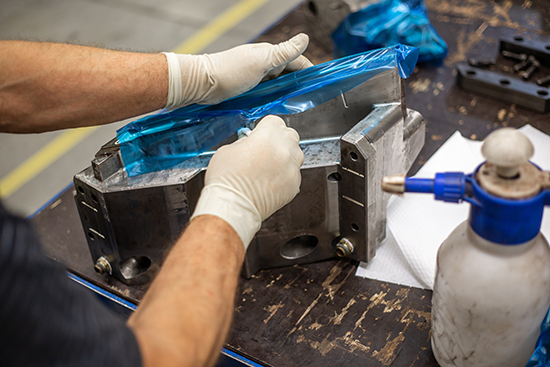
Why Does Mold Cleaning Frequency Matter More Than You Think?
Buildup accumulates on mold surfaces gradually. Mold release agent residue, resin, and contamination layer on the mold surface over time, and the effects are subtle at first. You might notice a slight surface texture change on your parts or a small increase in cycle time. Left unaddressed, that buildup leads to sticking, tearing, short shots, and visible surface defects.
In plastic injection molding environments, buildup in tight cavities or on parting lines is especially damaging. It can cause flash, sink marks, or incomplete fill. In composite and rubber applications, residue accumulation interferes with proper release and can compromise the surface finish that your customers expect.
The risk isn't limited to your parts. Buildup that stays on the mold long enough can become difficult to remove without aggressive intervention, which wears down your tooling and drives up maintenance costs.
How Do You Know When to Clean a Mold?
Knowing when to clean a mold starts with paying attention to the signals your production line is already sending you. These are the indicators that warrant immediate mold cleanup, even if you are mid-run:
- Parts are sticking or releasing inconsistently between cycles
- Surface finish is degrading or showing contamination
- Flash is appearing in areas that were previously clean
- You notice visible residue or discoloration on the mold surface
- Cycle times are creeping up without any other process change
Some of these issues show up gradually, which is why waiting for a visible problem before cleaning is reactive and costs more in scrap and rework than a proactive schedule would.
How Do You Build a Mold Maintenance Schedule That Works?
A reliable mold maintenance schedule does not have to be complicated. It does need to be consistent. The right interval depends on your material, production volume, and tooling complexity. Here is a general framework to build from.
- Between runs or at shift change: Inspect the mold surface for visible residue or buildup. Use compressed air to clear loose debris from cavity surfaces, vents, and parting lines. This quick step prevents minor buildup from becoming a production problem.
- Every 500 to 1,000 cycles (or per your process data): Perform a thorough cleanup using a mold cleaner formulated for your mold material and production environment. Pay attention to areas where residue tends to concentrate, including deep draws, undercuts, and parting lines.
- After extended runs or before storage: Clean the mold completely and inspect for wear. This is the right time to assess whether any areas need additional attention before the next production run.
- For hot runner systems: Hot runner tooling requires its own maintenance cadence. Buildup in gate areas and manifolds can affect fill balance and part quality. Include hot runner cleaning as a defined step in your process, not an afterthought.
A written mold maintenance checklist for each tool removes guesswork for every operator on every shift. When you document the steps and follow them consistently, you reduce variability and protect the results you have worked to dial in.
What Does Inconsistent Mold Cleaning Frequency Actually Cost You?
Irregular mold cleaning frequency creates variability. Variability creates scrap. Scrap creates rework, lost time, and pressure on your team to recover output that should have never been lost.
Proper maintenance prevents visible damage, but it also protects the consistency your production line depends on. When every shift follows the same cleaning interval and process, the results become predictable. Part quality stabilizes. Mold life extends. And the unplanned stoppages that come from chasing down a contamination problem mid-run become far less frequent.
Regular maintenance also slows the conditions that lead to surface corrosion and residue-related degradation in moisture-prone environments. Staying ahead of those issues is always less expensive than recovering from them.
What Are the Different Types of Mold Cleaners?
Not all mold cleaners are formulated the same way. The right choice depends on your mold material, production environment, and facility safety requirements.
Non-chlorinated mold cleaners are a versatile option for routine cleaning across plastics, composites, and rubber molding. They cut through residue and buildup without the corrosion risks of chlorinated formulas.
Non-flammable mold cleaners are the go-to when workplace safety is a priority, ideal for facilities with strict fire codes, limited ventilation, or heat-generating equipment nearby.
Citrus mold cleaners use natural solvent power to dissolve heavy buildup, making them a strong option for deeper cleanings between runs.
Matching the cleaner to your application keeps your maintenance routine effective and your tooling protected.
Ready to Put the Right Products Behind Your Maintenance Plan?
Knowing how often to clean is only part of the equation. The products you use matter just as much as the schedule. Using a cleaner formulated for your mold type and production material ensures you remove residue effectively without damaging the mold surface.
At Stoner Molding Solutions, we work with manufacturers across plastics, composites, rubber, and urethane to match the right products to the right process. If you are building or refining your cleaning routine, we can help you identify what will work for your specific molds and materials.
Get a product recommendation and let our team point you toward the right solution for your production environment.