


Knowledge Base
Purging Compounds: The Chemistry That Determines Cleaning Power, Changeover Speed, and Equipment Protection
A polymer changeover should be routine. Instead, it often turns into a costly guessing game. There’s lingering color, black specks, resin contamination, and a barrel that never seems fully clean. The results are predictable; however, longer downtime, more scrap, and extra wear from aggressive troubleshooting runs are to be expected.
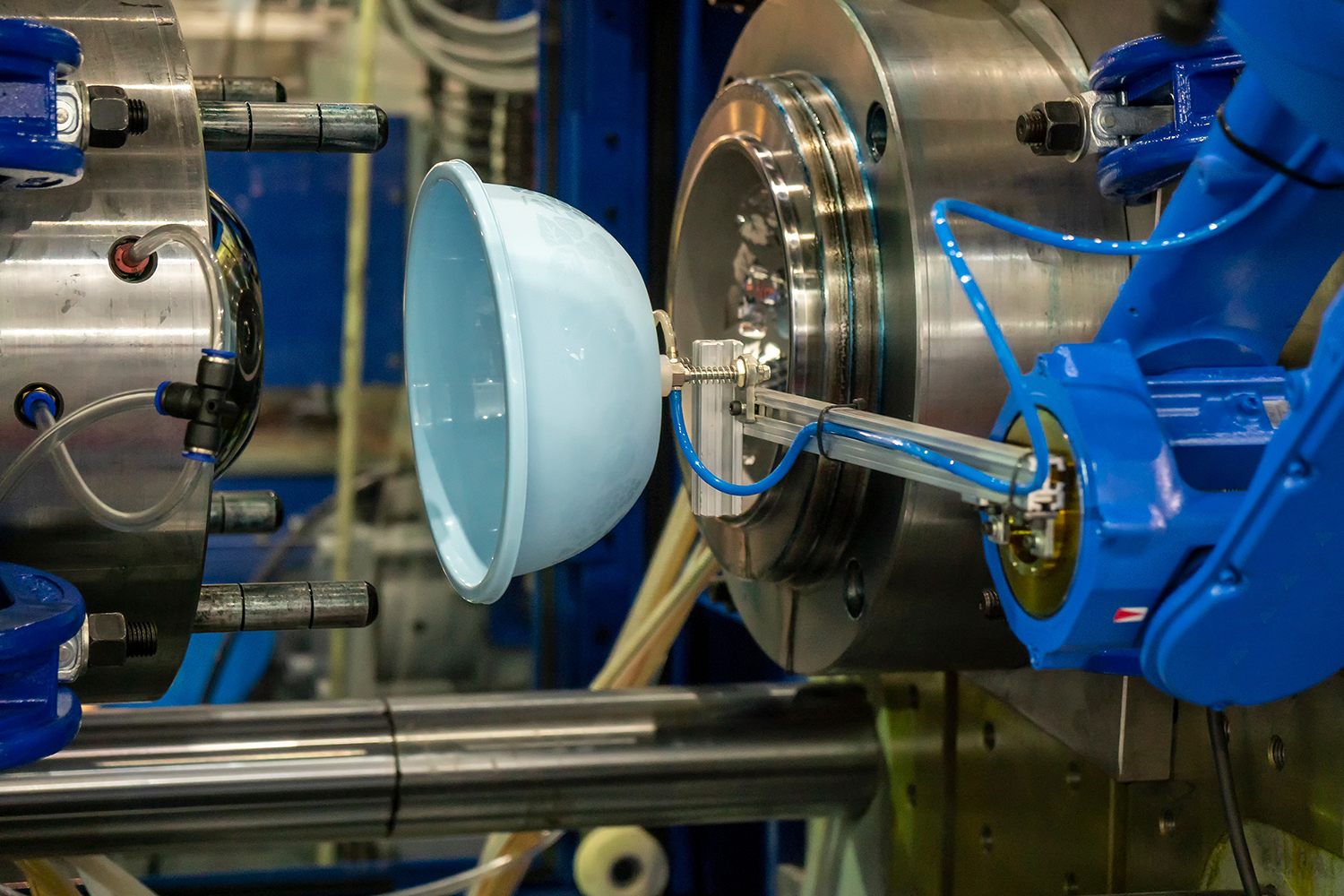
Purging compounds are frequently treated as interchangeable commodities, but the chemistry says otherwise. Formulation choices, such as carrier resin selection, active cleaning agents, and thermal behavior, determine whether a purge dislodges contamination efficiently or simply pushes it around the barrel. Understanding what is inside the purge is the fastest way to reduce trial-and-error and make changeovers more predictable.
Why Purging Chemistry Matters More Than the Label
At a high level, molding purging compounds work by combining heat, shear, and pressure to mobilize residue and remove it from the machine. The difference is how the formulation generates “cleaning force” at the metal surface.
Most plastic purging compounds contain:
- A carrier resin that provides melt flow and transport
- Active cleaning agents that increase scrubbing, wetting, and residue release
- Additives that influence thermal behavior, lubricity, and deposit lift
When one of these elements is mismatched to the process, the purge may melt and flow, but it will not meaningfully remove deposits from barrel walls, screw flights, or dead spots.
Compatibility First, Then Flow with Carrier Resin
Carrier resin is not a neutral base. It controls melt viscosity, wetting behavior, and compatibility with the process resin.
- Compatibility reduces smearing and re-deposition. When the carrier is more closely aligned in polarity and melt behavior with the resident polymer, it is more likely to “pick up” the residue rather than slide over it. That matters when resin contamination is driven by cling rather than bulk remnants.
- Viscosity controls shear scrubbing. A carrier with too low viscosity may move through the system quickly but lacks the shear and mechanical scrubbing needed at the metal surfaces to remove stubborn residue. A carrier that is too high can increase torque and trap contamination in stagnant zones.
- Thermal window sets the floor and ceiling. Carrier resins must remain stable and effective at the processing temperatures used for polymer changeover. If the carrier degrades, it can become a new source of contamination. If it is too cool to melt and wet the surface, it cannot carry out loosened deposits.
This is why purging compound selection must start with processing temperatures and the resin family currently in the barrel, not with a general-purpose default.
Match the Purge to the Contamination You Actually Have
Selection improves dramatically when contamination is classified instead of vaguely described.
- Color pigments and masterbatch streaking: Often requires higher scrubbing and better wetting. Strong mechanical action, combined with proper temperature control, tends to outperform low-viscosity flushes.
- Black specks and carbon: Frequently tied to overheated resin, stagnation, or shear hotspots. A purge with effective deposit lift and controlled thermal behavior is critical, along with attention to residence time.
- Resin contamination during polymer changeover: Compatibility and wetting matter. A mismatch between carrier resin and the substrate can increase smearing and extend cleanup time.
- Additive plate-out and processing aids: These can behave like films. Detergency and wetting mechanisms are often more effective than brute-force flushing.
Resin contamination in molding is not always “leftover pellets.” In many cases, it is a thin layer baked onto metal, which is why barrel and screw cleaning depend on more than melt flow.
Equipment Configuration Changes the Chemistry Requirements
A molding purging compound that performs well in one line can underperform in another because the machine architecture changes where material stagnates and how shear is generated.
Consider:
- Screw design and compression ratio: Mixing sections increase the opportunities for mechanical cleaning. Low-mixing screws may require formulations that compensate for poor wetting or controlled expansion.
- Check rings and screw tips: These areas create hiding places for residue. Purges that improve contact and boundary release can reduce ghosting after changeover.
- Hot runner systems: These have temperature gradients and dead spots. Purging compound selection must respect the thermal window and avoid behavior that destabilizes pressure.
- Screens, filters, and dies in extrusion: High-friction purges can help, but they must be managed to avoid pressure spikes and trapped particulate.
In other words, purging compound selection is partly a materials question and partly a fluid dynamics question.
Processing Temperatures: The Most Overlooked Selection Variable
Processing temperatures determine whether the purge:
- melts and wets surfaces effectively,
- maintains viscosity that produces useful shear,
- avoids decomposition that creates new residue.
When a purge runs below its ideal melt behavior, it can act like a partial flush, leaving films behind. When run too hot, thermal degradation can appear as new specks and odors, and cleaning effectiveness can drop because the compound no longer behaves predictably.
For chemistry-driven selection, start with the temperatures used for the resident and target resins. Then select a purge whose carrier resin and thermal behavior operate cleanly across that window.
A Practical Framework for Purging Compound Selection
Use this decision path to reduce trial-and-error:
- Define the changeover - Same polymer family with color shift, or full polymer changeover?
- Identify contamination type - pigment, carbon, degraded resin, additive film, or moisture-related defects.
- Map the thermal window - Current barrel profile, target resin profile, and any hot runner constraints.
- Assess equipment features - Screw design, mixing capability, check ring geometry, hot runner, and filters.
- Choose the dominant cleaning mechanism - High scrubbing, enhanced wetting, controlled expansion, or reactive deposit lift.
- Validate with controlled parameter - Stable screw speed, consistent soak time (if applicable), and a defined endpoint for “clean” to avoid endless purging.
This approach turns molding purging compounds from a procurement line item into a repeatable process control tool.
Make Changeovers Predictable With Chemistry-Driven Support
If polymer changeover and barrel cleaning are still consuming more downtime than they should, it is usually a selection problem, not a purging frequency problem. Let our team at Stoner Molding help your engineers, production managers, and maintenance teams. We can help you match plastic purging compounds to resin compatibility, processing temperatures, and equipment configurations, improving cleaning effectiveness without relying on trial-and-error. Contact us today to get started!
Shop Now
Unlike many mold release brands, Stoner Molding Solutions formulates, manufactures, and distributes our own products. Check out our full line of mold releases, sealers, cleaners, rust preventatives, and lubricants. In stock products are ready to ship now!